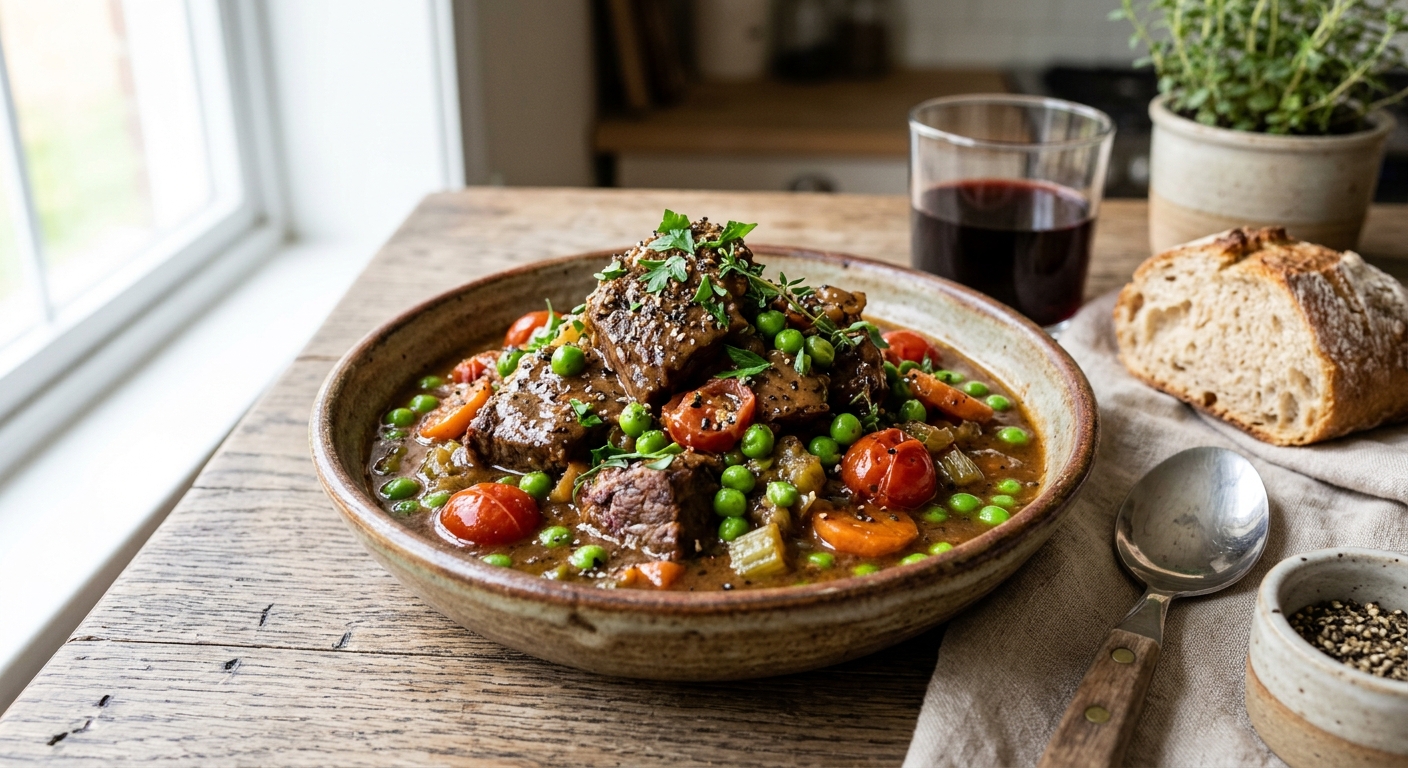
Black Pepper Beef Stew with Spring Peas

Dinner

Black Pepper Beef Stew with Spring Peas

A yogurt marinade starts the beef, followed by browned onions and a generous measure of black pepper. Add the snow peas and snap peas near the end so they stay distinct from the long-braised meat.

Yield
4 servings
Cuisine
Indian-inspired

Bring it to the table

Let tenderness set the pace

Chuck is ready when a fork slips in easily. If the pot gets dry before that point, add a small splash of water and keep simmering.

At the table

Spoon over rice and finish with cilantro.

Before you start

Gather your ingredients.

Full quantities and serving adjustments are in the recipe card below.

See the ingredient checklist
  • 1/3 cup plain whole-milk Greek yogurt
  • 4 tsp black pepper
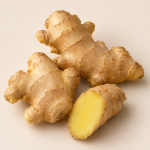
  • 1 piece fresh ginger — 2 inches long; finely chopped and divided
  • 6 cloves garlic — finely chopped and divided
  • 1 tsp Diamond Crystal kosher salt — for marinade; or half as much Morton
  • 1 tbsp Diamond Crystal kosher salt — for stew; or use 1 3/4 tsp Morton for the base batch
  • 2 lb beef chuck — cut into 1-inch cubes
  • 2/3 cup vegetable oil — divided
  • 2 medium onions — quartered and thinly sliced
  • 1 jalapeño — finely chopped
  • 2 tbsp ground coriander
  • 1 tbsp garam masala
  • 1 tsp cumin seeds
  • 3 cups water — plus up to 1/2 cup more if needed for the base batch
  • 4 oz snow peas
  • 4 oz sugar snap peas
  • cilantro — to finish
  • cooked rice — to serve

A few useful notes.

For the base batch, the total Diamond Crystal salt is 1 tablespoon plus 1 teaspoon; taste before adding more.

Keep the marinating beef refrigerated.

The cooking plan

How to make Black Pepper Beef Stew with Spring Peas.

  1. Combine yogurt, pepper, half the ginger, two of the six garlic cloves and the marinade salt. Coat the beef and refrigerate for 20 minutes.

  2. Heat half the oil in a heavy pot over medium-high heat. Brown the beef in two batches, allowing about 5 minutes per side. Transfer to a plate.

  3. Add the remaining oil, onions, remaining ginger and garlic, and jalapeño. Cook for 6–8 minutes, stirring. Add coriander, garam masala, cumin seeds and stew salt. Continue cooking and stirring for 12–15 minutes, until the onions are golden.

  4. Return the beef and its juices. Add the measured water, bring to a simmer and cover. Cook gently for 1 1/2–2 hours, until the beef is tender and the liquid has reduced by about half. Add a little extra water if needed to prevent sticking.

  5. Add both kinds of peas and simmer for about 5 minutes, until just tender. Serve with rice and cilantro.

Let’s cook

The full recipe.

Check off ingredients as you get them ready.

Changing servings? The ingredient list scales automatically. Adjust quantities named in the steps to match, and choose pans and cooking times for your batch.
Black Pepper Beef Stew with Spring Peas

No ratings yet
Peppery beef chuck braised with yogurt, ginger, warming spices and two kinds of peas.
Servings: 4 servings
Course: Dinner
Cuisine: Indian-inspired

Some ingredient links are affiliate links. We may earn a commission at no extra cost to you. As an Amazon Associate I earn from qualifying purchases.

Ingredients
  

  • ⅓ cup plain whole-milk Greek yogurt
  • 4 tsp black pepper
  • Fresh ginger roots with a cut piece showing the yellow interior1 piece fresh ginger 2 inches long; finely chopped and divided
  • 6 cloves garlic finely chopped and divided
  • Light irregular kosher salt flakes in a small white bowl1 tsp Diamond Crystal kosher salt for marinade; or half as much Morton
  • Light irregular kosher salt flakes in a small white bowl1 tbsp Diamond Crystal kosher salt for stew; or use 1 3/4 tsp Morton for the base batch
  •  
    2 lb beef chuck cut into 1-inch cubes
  • ⅔ cup vegetable oil divided
  • 2 medium onions quartered and thinly sliced
  •  
    1 jalapeño finely chopped
  • 2 tbsp ground coriander
  •  
    1 tbsp garam masala
  •  
    1 tsp cumin seeds
  • 3 cups water plus up to 1/2 cup more if needed for the base batch
  •  
    4 oz snow peas
  •  
    4 oz sugar snap peas
  • cilantro to finish
  •  
    cooked rice to serve

Equipment images are illustrative. Exact products may vary.

Instructions
 

  1. Combine yogurt, pepper, half the ginger, two of the six garlic cloves and the marinade salt. Coat the beef and refrigerate for 20 minutes.
  2. Heat half the oil in a heavy pot over medium-high heat. Brown the beef in two batches, allowing about 5 minutes per side. Transfer to a plate.
  3. Add the remaining oil, onions, remaining ginger and garlic, and jalapeño. Cook for 6–8 minutes, stirring. Add coriander, garam masala, cumin seeds and stew salt. Continue cooking and stirring for 12–15 minutes, until the onions are golden.
  4. Return the beef and its juices. Add the measured water, bring to a simmer and cover. Cook gently for 1 1/2–2 hours, until the beef is tender and the liquid has reduced by about half. Add a little extra water if needed to prevent sticking.
  5. Add both kinds of peas and simmer for about 5 minutes, until just tender. Serve with rice and cilantro.

Notes

For the base batch, the total Diamond Crystal salt is 1 tablespoon plus 1 teaspoon; taste before adding more.
Keep the marinating beef refrigerated.

Tried this recipe?

Let us know how it was!

A couple of useful answers.

When do the peas go in?

Add them only after the beef is tender, for the last few minutes of cooking.

Can I add more water?

Yes. Add small amounts if the pot starts to catch before the beef is tender.

Keep the good food going

Similar Recipes

Find another recipe to bring to the table.

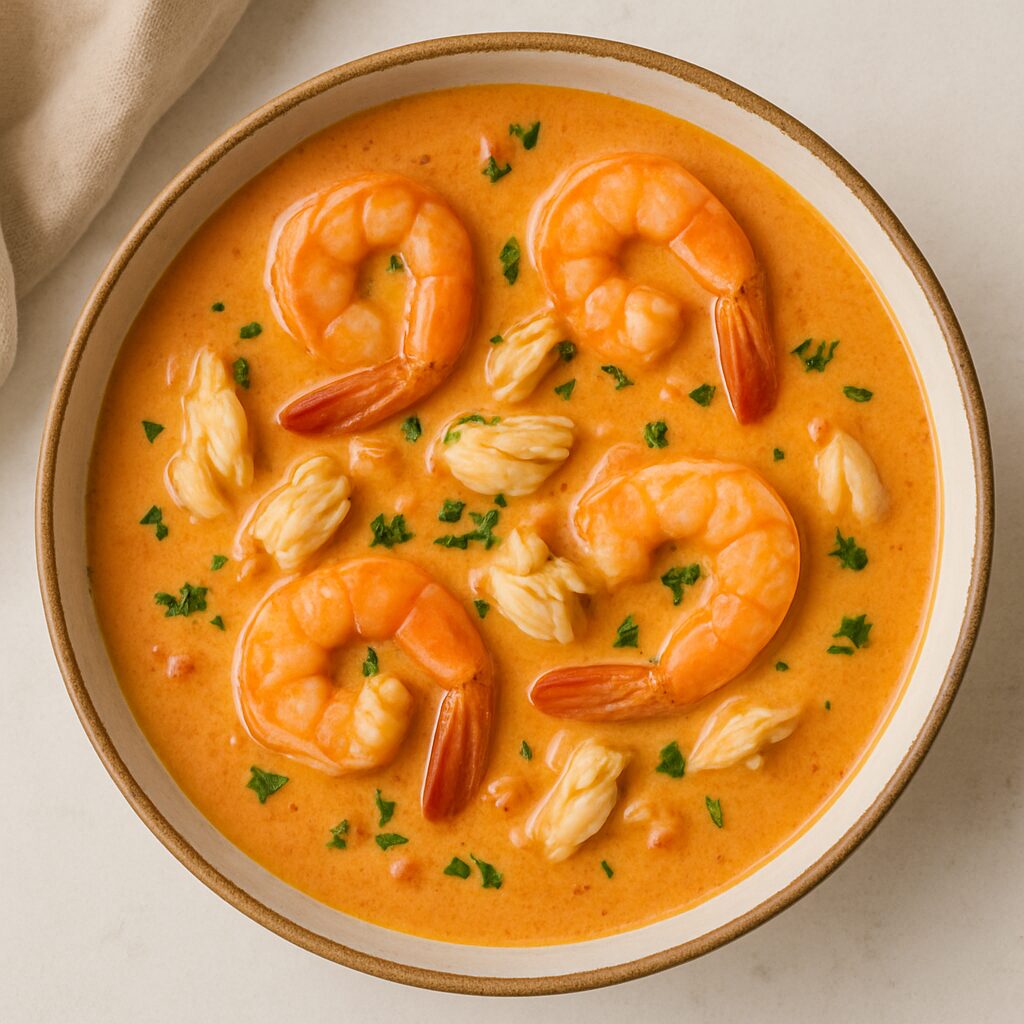
Lemon-Egg Seafood Stew with Fennel

Dinner

Lemon-Egg Seafood Stew with Fennel

Fennel and onion soften into the base before clams, shrimp and fish go into the pot. A tempered lemon-and-egg mixture gives the broth its body; gentle heat keeps the finish smooth.

Yield
4 servings
Cuisine
Greek-inspired

Bring it to the table

Temper the eggs slowly

Whisk a little hot broth into the eggs before returning them to the pot. Keep the stew below a rolling boil as you finish cooking the seafood.

At the table

Ladle into bowls with chopped herbs, fennel fronds and lemon wedges.

Before you start

Gather your ingredients.

Full quantities and serving adjustments are in the recipe card below.

See the ingredient checklist
  • 3 large egg yolks
  • 1 large egg
  • 1/2 cup lemon juice
  • 3 tbsp olive oil
  • 1 medium fennel bulb — fronds reserved; bulb quartered, cored and thinly sliced
  • 1 medium onion — thinly sliced
  • 6 cloves garlic — finely chopped
  • 1 lb small clams — scrubbed; discard cracked shells and any open clam that does not close when tapped
  • 1 lb shrimp — peeled and deveined
  • 1 tsp Diamond Crystal kosher salt — or use half as much Morton kosher salt
  • 1 1/2 cups water
  • 1 lb white fish fillets — cut into roughly 4-inch pieces
  • 1/4 cup heavy cream
  • 1 tsp black pepper
  • 2 tbsp chopped parsley or dill — plus more to finish
  • lemon wedges — to serve

A few useful notes.

The base batch serves about 4–6; the serving control starts at 4.

Use a thermometer to check the broth and seafood separately. Gentle heat helps prevent the eggs from curdling.

The cooking plan

How to make Lemon-Egg Seafood Stew with Fennel.

  1. Whisk the yolks, whole egg and lemon juice together in a heatproof bowl. Set beside the stove.

  2. Warm the oil in a wide pot over medium heat. Add the sliced fennel, onion and garlic. Cook, stirring, for 6–8 minutes, until softened.

  3. Add the clams, shrimp and salt. Stir gently for about 4 minutes, until the shrimp start to turn opaque. Pour in the measured water, bring to a boil, then reduce to a gentle simmer.

  4. Scoop out 3/4 cup hot broth for the base batch. Whisk it gradually into the egg mixture, then slowly stir the warmed egg mixture back into the pot.

  5. Lay the fish in the broth and add the cream and pepper. Cook over low heat until the egg-thickened liquid reaches 160°F, the fish and shrimp reach 145°F, and the clams have opened. Avoid a rolling boil. Discard clams that stay closed.

  6. Fold in the chopped herbs. Divide among bowls and finish with extra herbs, reserved fennel fronds and lemon wedges.

Let’s cook

The full recipe.

Check off ingredients as you get them ready.

Changing servings? The ingredient list scales automatically. Adjust quantities named in the steps to match, and choose pans and cooking times for your batch.

Lemon-Egg Seafood Stew with Fennel

No ratings yet
A lemony seafood stew with fennel, clams, shrimp and white fish in an egg-thickened broth.
Servings: 4 servings
Course: Dinner
Cuisine: Greek-inspired

Some ingredient links are affiliate links. We may earn a commission at no extra cost to you. As an Amazon Associate I earn from qualifying purchases.

Ingredients
  

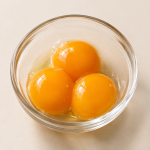
  • Three separated raw egg yolks in a clear glass bowl3 large egg yolks
  • 1 large egg
  • ½ cup lemon juice
  • 3 tbsp olive oil
  •  
    1 medium fennel bulb fronds reserved; bulb quartered, cored and thinly sliced
  • 1 medium Onions thinly sliced
  • 6 cloves garlic finely chopped
  •  
    1 lb small clams scrubbed; discard cracked shells and any open clam that does not close when tapped
  • 1 lb shrimp peeled and deveined
  • Light irregular kosher salt flakes in a small white bowl1 tsp Diamond Crystal kosher salt or use half as much Morton kosher salt
  • 1 ½ cups water
  •  
    1 lb white fish fillets cut into roughly 4-inch pieces
  • ¼ cup heavy cream
  • 1 tsp black pepper
  •  
    2 tbsp chopped parsley or dill plus more to finish
  •  
    lemon wedges to serve

Equipment images are illustrative. Exact products may vary.

Instructions
 

  1. Whisk the yolks, whole egg and lemon juice together in a heatproof bowl. Set beside the stove.
  2. Warm the oil in a wide pot over medium heat. Add the sliced fennel, onion and garlic. Cook, stirring, for 6–8 minutes, until softened.
  3. Add the clams, shrimp and salt. Stir gently for about 4 minutes, until the shrimp start to turn opaque. Pour in the measured water, bring to a boil, then reduce to a gentle simmer.
  4. Scoop out 3/4 cup hot broth for the base batch. Whisk it gradually into the egg mixture, then slowly stir the warmed egg mixture back into the pot.
  5. Lay the fish in the broth and add the cream and pepper. Cook over low heat until the egg-thickened liquid reaches 160°F, the fish and shrimp reach 145°F, and the clams have opened. Avoid a rolling boil. Discard clams that stay closed.
  6. Fold in the chopped herbs. Divide among bowls and finish with extra herbs, reserved fennel fronds and lemon wedges.

Notes

The base batch serves about 4–6; the serving control starts at 4.
Use a thermometer to check the broth and seafood separately. Gentle heat helps prevent the eggs from curdling.

Tried this recipe?

Let us know how it was!

A couple of useful answers.

Why warm the eggs first?

Gradually adding hot broth brings the eggs closer to the pot temperature before they are stirred in.

What happens to unopened clams?

Discard any clams that remain closed after cooking.

Keep the good food going

Similar Recipes

Find another recipe to bring to the table.

Lemon-Ginger Honey Drink, Hot or Sparkling

Drinks

Lemon-Ginger Honey Drink, Hot or Sparkling

Ginger and lemon simmer with honey into a concentrated base. Strain it, then add a little to hot water or pour it over ice and top with seltzer.

Yield
4 servings
Cuisine
Contemporary

Bring it to the table

Press the ginger when straining

Use a fine sieve and press the cooked ginger gently to recover the liquid. The concentrate is strong, so mix a small measure into water rather than serving it straight.

At the table

For each drink, start with about 2 tablespoons concentrate and top with hot water or seltzer to taste. Garnish with lemon wheels or twists.

Before you start

Gather your ingredients.

Full quantities and serving adjustments are in the recipe card below.

See the ingredient checklist
  • 10 oz fresh ginger — peeled and coarsely chopped
  • 5 wide strips lemon zest
  • 1 cup lemon juice
  • 1/4 cup honey
  • cayenne pepper — a pinch
  • kosher salt — a pinch
  • 1/2 cup water
  • hot water or seltzer — to serve
  • ice — for a cold drink
  • lemon wheels or twists — to finish

A few useful notes.

The base batch makes about 4–5 drinks; the serving control starts at 4.

Keep leftover cooled concentrate covered in the refrigerator.

The cooking plan

How to make Lemon-Ginger Honey Drink, Hot or Sparkling.

  1. Put the ginger, lemon zest, lemon juice, honey, cayenne, salt and measured water in a small saucepan. Bring to a boil, then lower the heat and simmer for 30–40 minutes, until darker and reduced by about a third.

  2. Strain through a fine sieve into a heatproof jug, pressing the solids to recover the liquid. Discard the solids. The base batch makes roughly half to two thirds of a cup of concentrate.

  3. For a hot drink, put about 2 tablespoons concentrate in a mug and add hot water to taste. For a cold drink, cool the concentrate, pour the same starting measure over ice and top with seltzer. Adjust the dilution to your preference and garnish with lemon.

Let’s cook

The full recipe.

Check off ingredients as you get them ready.

Changing servings? The ingredient list scales automatically. Adjust quantities named in the steps to match, and choose pans and cooking times for your batch.

Lemon-Ginger Honey Drink, Hot or Sparkling

No ratings yet
A ginger, lemon and honey concentrate to mix with hot water or chilled seltzer.
Servings: 4 servings
Course: Drinks
Cuisine: Contemporary

Some ingredient links are affiliate links. We may earn a commission at no extra cost to you. As an Amazon Associate I earn from qualifying purchases.

Ingredients
  

Concentrate
  • Fresh ginger roots with a cut piece showing the yellow interior10 oz fresh ginger peeled and coarsely chopped
  • Finely grated yellow lemon zest beside a partly zested lemon5 wide strips lemon zest
  • 1 cup lemon juice
  • Golden honey in a glass bowl with a wooden honey dipper¼ cup honey
  • cayenne pepper a pinch
  • kosher salt a pinch
  • ½ cup water
To finish
  •  
    hot water or seltzer to serve
  •  
    ice for a cold drink
  •  
    lemon wheels or twists to finish

Equipment images are illustrative. Exact products may vary.

Instructions
 

  1. Put the ginger, lemon zest, lemon juice, honey, cayenne, salt and measured water in a small saucepan. Bring to a boil, then lower the heat and simmer for 30–40 minutes, until darker and reduced by about a third.
  2. Strain through a fine sieve into a heatproof jug, pressing the solids to recover the liquid. Discard the solids. The base batch makes roughly half to two thirds of a cup of concentrate.
  3. For a hot drink, put about 2 tablespoons concentrate in a mug and add hot water to taste. For a cold drink, cool the concentrate, pour the same starting measure over ice and top with seltzer. Adjust the dilution to your preference and garnish with lemon.

Notes

The base batch makes about 4–5 drinks; the serving control starts at 4.
Keep leftover cooled concentrate covered in the refrigerator.

Tried this recipe?

Let us know how it was!

A couple of useful answers.

Can I serve it cold?

Yes. Cool the concentrate, pour over ice and add seltzer to taste.

How much concentrate goes in a drink?

Start with about 2 tablespoons per mug or glass, then dilute with hot water or seltzer to your preference.

Keep the good food going

Similar Recipes

Find another recipe to bring to the table.

Lemon Tart with Poppy Seed Shortbread Crust

Dessert

Lemon Tart with Poppy Seed Shortbread Crust

The crust and filling both come together in the food processor. Freeze the pressed-in shell briefly, bake it until lightly golden, then add the lemon filling and finish at a lower temperature.

Yield
8 servings
Cuisine
European-inspired

Bring it to the table

Chill the pressed crust before baking

Press the crumbly dough evenly across the base and sides of the tart pan, then freeze it until firm. This gives the shell a head start before the filling is added.

At the table

Let the tart cool before slicing. Dust with powdered sugar just before serving.

Before you start

Gather your ingredients.

Full quantities and serving adjustments are in the recipe card below.

See the ingredient checklist
  • 188 g all-purpose flour
  • 37 g powdered sugar
  • 2 tbsp poppy seeds
  • 1/2 tsp Diamond Crystal kosher salt — or use half as much Morton kosher salt
  • 1/2 cup unsalted butter — chilled and cut into pieces
  • 1 large egg yolk
  • 1 large lemon — zest only
  • 250 g granulated sugar
  • 2 large eggs
  • 1 large egg yolk
  • 1/2 cup unsalted butter — melted and slightly cooled
  • 1/3 cup lemon juice
  • 1/2 tsp Diamond Crystal kosher salt — or use half as much Morton kosher salt
  • 2 tbsp all-purpose flour
  • powdered sugar — to finish

A few useful notes.

The base batch makes about 8–10 portions in a 9-inch removable-base tart pan. The serving control starts at 8.

Use the separate egg yolks and butter measures for crust and filling at their specified stages.

The cooking plan

How to make Lemon Tart with Poppy Seed Shortbread Crust.

  1. Heat the oven to 325°F with a rack in the middle. Pulse the crust flour, powdered sugar, poppy seeds and crust salt in a food processor. Add the cold butter and pulse until crumbly, then add the crust yolk and pulse just until combined.

  2. Press the dry, crumbly dough firmly over the base and up the sides of a 9-inch tart pan with a removable base. Freeze for about 30 minutes, until firm. Wipe out the processor.

  3. Bake the crust for 25–30 minutes, until barely golden. Cool slightly on a rack and lower the oven to 300°F.

  4. Rub the lemon zest into the filling sugar with your fingers until fragrant and lightly clumped. Put into the processor with the eggs, filling yolk, melted butter, lemon juice and filling salt. Process until smooth, then pulse in the filling flour just to combine.

  5. Put the pan with its crust on the oven rack before pouring in the filling, so you do not need to carry a very full tart across the kitchen. Bake for 45–50 minutes, until the filling is just set with only a slight wobble in the center and the crust edges are golden.

  6. Cool on a rack before slicing. Refrigerate if preparing ahead, and add powdered sugar only just before serving.

Let’s cook

The full recipe.

Check off ingredients as you get them ready.

Changing servings? The ingredient list scales automatically. Adjust quantities named in the steps to match, and choose pans and cooking times for your batch.

Lemon Tart with Poppy Seed Shortbread Crust

No ratings yet
A lemon custard tart in a press-in poppy seed shortbread crust, finished with powdered sugar.
Servings: 8 servings
Course: Dessert
Cuisine: European-inspired

Some ingredient links are affiliate links. We may earn a commission at no extra cost to you. As an Amazon Associate I earn from qualifying purchases.

Ingredients
  

Crust
  • 188 g all-purpose flour
  • Fine white powdered confectioners sugar in a prep bowl37 g powdered sugar
  •  
    2 tbsp poppy seeds
  • Light irregular kosher salt flakes in a small white bowl½ tsp Diamond Crystal kosher salt or use half as much Morton kosher salt
  • ½ cup unsalted butter chilled and cut into pieces
  • Three separated raw egg yolks in a clear glass bowl1 large Egg yolks
Filling
  • 1 large lemon zest only
  • 250 g granulated sugar
  • 2 large eggs
  • Three separated raw egg yolks in a clear glass bowl1 large Egg yolks
  • ½ cup unsalted butter melted and slightly cooled
  • ⅓ cup lemon juice
  • Light irregular kosher salt flakes in a small white bowl½ tsp Diamond Crystal kosher salt or use half as much Morton kosher salt
  • 2 tbsp all-purpose flour
To finish
  • Fine white powdered confectioners sugar in a prep bowlpowdered sugar to finish

Equipment images are illustrative. Exact products may vary.

Instructions
 

  1. Heat the oven to 325°F with a rack in the middle. Pulse the crust flour, powdered sugar, poppy seeds and crust salt in a food processor. Add the cold butter and pulse until crumbly, then add the crust yolk and pulse just until combined.
  2. Press the dry, crumbly dough firmly over the base and up the sides of a 9-inch tart pan with a removable base. Freeze for about 30 minutes, until firm. Wipe out the processor.
  3. Bake the crust for 25–30 minutes, until barely golden. Cool slightly on a rack and lower the oven to 300°F.
  4. Rub the lemon zest into the filling sugar with your fingers until fragrant and lightly clumped. Put into the processor with the eggs, filling yolk, melted butter, lemon juice and filling salt. Process until smooth, then pulse in the filling flour just to combine.
  5. Put the pan with its crust on the oven rack before pouring in the filling, so you do not need to carry a very full tart across the kitchen. Bake for 45–50 minutes, until the filling is just set with only a slight wobble in the center and the crust edges are golden.
  6. Cool on a rack before slicing. Refrigerate if preparing ahead, and add powdered sugar only just before serving.

Notes

The base batch makes about 8–10 portions in a 9-inch removable-base tart pan. The serving control starts at 8.
Use the separate egg yolks and butter measures for crust and filling at their specified stages.

Tried this recipe?

Let us know how it was!

A couple of useful answers.

Is the crust rolled out?

No. Press the crumbly dough directly into the pan, then freeze it until firm before baking.

When is the filling done?

It should be set around the edges with only a slight wobble at the center when the pan is gently moved.

Keep the good food going

Similar Recipes

Find another recipe to bring to the table.

Rosemary Olive Oil Cake with Orange Caramel

Dessert

Rosemary Olive Oil Cake with Orange Caramel

Pulse fresh rosemary into the sugar for this olive oil cake, then finish it with a cream caramel made with blood orange juice. Fresh orange pieces go on just before serving.

Yield
10 servings
Cuisine
Mediterranean-inspired

Bring it to the table

Flavor the sugar first

Processing rosemary with sugar breaks the leaves into small pieces and distributes them through the batter. Beat that sugar with the eggs before gradually adding the oil.

At the table

Add the fresh citrus and caramel close to serving time. Bring extra caramel to the table for spooning over slices.

Before you start

Gather your ingredients.

Full quantities and serving adjustments are in the recipe card below.

See the ingredient checklist
  • 2/3 cup olive oil — plus more for the pan
  • 150 g granulated sugar
  • 1/4 cup rosemary leaves — packed
  • 125 g all-purpose flour
  • 63 g whole wheat flour
  • 1 tsp baking powder
  • 1/4 tsp baking soda
  • 1/2 tsp Diamond Crystal kosher salt — or use half as much Morton kosher salt
  • 1/2 tsp vanilla extract
  • 4 large eggs
  • 3/4 cup sour cream
  • 1/2 cup blood orange or navel orange juice
  • 200 g granulated sugar
  • 1/4 cup water
  • 1/2 cup heavy cream — at room temperature for mixing
  • 1 tbsp lemon juice
  • kosher salt — a pinch, to taste
  • 1 blood orange or navel orange — peeled and cut into segments or wheels
  • 1 Cara Cara or navel orange — peeled and cut into segments or wheels
  • flaky sea salt — to finish

A few useful notes.

The base batch serves about 10–12 and uses a 9-inch springform pan. The serving control starts at 10.

Add the caramel close to serving so the cake does not sit soaking under the sauce.

Use fresh rosemary leaves, not the woody stems.

The cooking plan

How to make Rosemary Olive Oil Cake with Orange Caramel.

  1. Heat the oven to 350°F with a rack in the middle. Brush a 9-inch springform pan generously with oil. Line its base with parchment and brush the paper with oil.

  2. Pulse the cake sugar and rosemary in a blender or food processor until combined with small pieces of herb. Whisk both flours, baking powder, baking soda and measured salt in a separate bowl. Stir the vanilla into the measured cake oil.

  3. Beat the rosemary sugar and eggs on high speed for about 4 minutes, until pale, thick and roughly doubled in volume. On low speed, gradually drizzle in the oil mixture. Mix in half the dry ingredients, then the sour cream. Fold the remaining dry mixture in by hand, scraping the bowl.

  4. Transfer to the pan and smooth the surface. Bake for 35–40 minutes, until golden, puffed and a tester comes out clean. Cool slightly on a rack, remove the springform sides, turn out and peel away the parchment. Set right-side up on a serving plate.

  5. For the caramel, dissolve the caramel sugar in its water in a saucepan over medium-high heat, stirring. Stop stirring and cook, swirling the pan occasionally, for about 9–11 minutes, until a deep golden honey color.

  6. Lower the heat and carefully add the cream, orange juice, lemon juice and a pinch of salt; the mixture will bubble strongly and may clump. Stir with a heatproof spatula for 5–7 minutes, until any hardened caramel melts and the sauce thickens slightly. Let cool, stirring now and then.


  7. Just before serving, arrange the fresh citrus over the cake, spoon some caramel over it and finish with flaky salt. Offer remaining caramel alongside.

Let’s cook

The full recipe.

Check off ingredients as you get them ready.

Changing servings? The ingredient list scales automatically. Adjust quantities named in the steps to match, and choose pans and cooking times for your batch.

Rosemary Olive Oil Cake with Orange Caramel

No ratings yet
A rosemary-scented olive oil cake with blood orange caramel and fresh citrus on top.
Servings: 10 servings
Course: Dessert
Cuisine: Mediterranean-inspired

Some ingredient links are affiliate links. We may earn a commission at no extra cost to you. As an Amazon Associate I earn from qualifying purchases.

Ingredients
  

Cake
  • ⅔ cup olive oil plus more for the pan
  • 150 g granulated sugar
  •  
    ¼ cup rosemary leaves packed
  • 125 g all-purpose flour
  •  
    63 g whole wheat flour
  • Baking powder in a white prep bowl with a measuring spoon1 tsp baking powder
  • Fine white baking soda in a glass prep bowl with a measuring spoon¼ tsp baking soda
  • Light irregular kosher salt flakes in a small white bowl½ tsp Diamond Crystal kosher salt or use half as much Morton kosher salt
  • ½ tsp vanilla extract
  • 4 large eggs
  • ¾ cup sour cream
Caramel
  •  
    ½ cup blood orange or navel orange juice
  • 200 g granulated sugar
  • ¼ cup water
  • ½ cup heavy cream at room temperature for mixing
  • 1 tbsp lemon juice
  • kosher salt a pinch, to taste
To finish
  •  
    1 blood orange or navel orange peeled and cut into segments or wheels
  •  
    1 Cara Cara or navel orange peeled and cut into segments or wheels
  • Large delicate sea salt flakes in a glass prep bowlflaky sea salt to finish

Equipment images are illustrative. Exact products may vary.

Instructions
 

  1. Heat the oven to 350°F with a rack in the middle. Brush a 9-inch springform pan generously with oil. Line its base with parchment and brush the paper with oil.
  2. Pulse the cake sugar and rosemary in a blender or food processor until combined with small pieces of herb. Whisk both flours, baking powder, baking soda and measured salt in a separate bowl. Stir the vanilla into the measured cake oil.
  3. Beat the rosemary sugar and eggs on high speed for about 4 minutes, until pale, thick and roughly doubled in volume. On low speed, gradually drizzle in the oil mixture. Mix in half the dry ingredients, then the sour cream. Fold the remaining dry mixture in by hand, scraping the bowl.
  4. Transfer to the pan and smooth the surface. Bake for 35–40 minutes, until golden, puffed and a tester comes out clean. Cool slightly on a rack, remove the springform sides, turn out and peel away the parchment. Set right-side up on a serving plate.
  5. For the caramel, dissolve the caramel sugar in its water in a saucepan over medium-high heat, stirring. Stop stirring and cook, swirling the pan occasionally, for about 9–11 minutes, until a deep golden honey color.
  6. Lower the heat and carefully add the cream, orange juice, lemon juice and a pinch of salt; the mixture will bubble strongly and may clump. Stir with a heatproof spatula for 5–7 minutes, until any hardened caramel melts and the sauce thickens slightly. Let cool, stirring now and then.
  7. Just before serving, arrange the fresh citrus over the cake, spoon some caramel over it and finish with flaky salt. Offer remaining caramel alongside.

Notes

The base batch serves about 10–12 and uses a 9-inch springform pan. The serving control starts at 10.
Add the caramel close to serving so the cake does not sit soaking under the sauce.
Use fresh rosemary leaves, not the woody stems.

Tried this recipe?

Let us know how it was!

A couple of useful answers.

When do I add the orange caramel?

Wait until close to serving, then spoon it over the cake and fresh citrus.

What if the caramel clumps when I add the cream?

Keep it over reduced heat and stir with a heatproof spatula until the hardened pieces melt back into the sauce.

Keep the good food going

Similar Recipes

Find another recipe to bring to the table.

Orange-Ginger Braised Pork with Crispy Shallots

Dinner

Orange-Ginger Braised Pork with Crispy Shallots

Brown pork shoulder before a slow simmer in orange, ginger and soy. The final uncovered stage reduces the sauce while the meat becomes tender enough to pull apart.

Yield
6 servings
Cuisine
Asian-inspired fusion

Bring it to the table

Reduce after the covered simmer

Keep the pot covered for the first two hours. Remove the lid for the final stage so the braising liquid thickens around the pork.

At the table

Serve over steamed jasmine rice with sauce from the pot, crispy shallots, cilantro and mint.

Before you start

Gather your ingredients.

Full quantities and serving adjustments are in the recipe card below.

See the ingredient checklist
  • 3 lb boneless pork shoulder — fat cap trimmed; cut into large pieces
  • kosher salt — to taste
  • 2 tbsp vegetable oil — for browning
  • 2 medium oranges
  • 5 cloves garlic — smashed
  • 1 3-inch piece fresh ginger — finely chopped
  • 1/3 cup soy sauce
  • 1/4 cup mirin
  • 2 tbsp brown sugar — light or dark
  • 1/4 tsp crushed red pepper flakes
  • 2 cups water
  • 1/3 cup vegetable oil — for frying the shallots
  • 3 large shallots — thinly sliced
  • steamed jasmine rice — to serve
  • cilantro leaves and tender stems — to serve
  • mint leaves — to serve

A few useful notes.

The base batch serves about 6–8; the serving control starts at 6.

The pork should be thoroughly cooked and tender after the long braise. If the sauce reduces too quickly before the meat is tender, lower the heat and add a little water.

The cooking plan

How to make Orange-Ginger Braised Pork with Crispy Shallots.

  1. Pat the pork dry and season with salt. Heat the browning oil in a heavy pot over medium-high heat. Brown the pork on all sides, working in batches if needed, about 8–10 minutes per batch.

  2. Peel one orange in broad strips, keeping the peel. Halve and juice both oranges, straining out seeds. The base batch will give roughly half to two thirds of a cup of juice.

  3. Return all the pork to the pot and add the orange peel and juice, garlic, ginger, soy sauce, mirin, brown sugar, pepper flakes and water. Bring to a boil, cover, lower the heat and simmer for 2 hours.

  4. Uncover and continue simmering briskly for about 1 hour, until the pork pulls apart easily and the sauce is thick enough to coat it. Keep an eye on the pot as the liquid reduces.

  5. Meanwhile, heat the shallot oil in a small saucepan over medium-high heat. Fry the shallots for 6–8 minutes, stirring occasionally, until golden and crisp. Lift out with a slotted spoon onto paper towels and season lightly with salt.

  6. Pull the pork into large pieces with a fork. Serve over rice with the reduced sauce, crispy shallots, cilantro and mint.

Let’s cook

The full recipe.

Check off ingredients as you get them ready.

Changing servings? The ingredient list scales automatically. Adjust quantities named in the steps to match, and choose pans and cooking times for your batch.

Orange-Ginger Braised Pork with Crispy Shallots

No ratings yet
Pork shoulder braised with orange, ginger, soy sauce and mirin, served with crisp shallots and herbs.
Servings: 6 servings
Course: Dinner
Cuisine: Asian-inspired fusion

Some ingredient links are affiliate links. We may earn a commission at no extra cost to you. As an Amazon Associate I earn from qualifying purchases.

Ingredients
  

Pork
  •  
    3 lb boneless pork shoulder fat cap trimmed; cut into large pieces
Pork and shallots
  • kosher salt to taste
Pork
  • 2 tbsp vegetable oil for browning
Braise
  •  
    2 medium orange
  • 5 cloves garlic smashed
  • Fresh ginger roots with a cut piece showing the yellow interior1 3-inch piece fresh ginger finely chopped
  • ⅓ cup soy sauce
  •  
    ¼ cup mirin
  • Moist light brown sugar in a white prep bowl2 tbsp brown sugar light or dark
  • ¼ tsp crushed red pepper flakes
  • 2 cups water
To finish
  • ⅓ cup vegetable oil for frying the shallots
  • Whole, halved and chopped pink shallots3 large Shallot thinly sliced
  •  
    steamed jasmine rice to serve
  • cilantro leaves and tender stems to serve
  •  
    mint leaves to serve

Equipment images are illustrative. Exact products may vary.

Instructions
 

  1. Pat the pork dry and season with salt. Heat the browning oil in a heavy pot over medium-high heat. Brown the pork on all sides, working in batches if needed, about 8–10 minutes per batch.
  2. Peel one orange in broad strips, keeping the peel. Halve and juice both oranges, straining out seeds. The base batch will give roughly half to two thirds of a cup of juice.
  3. Return all the pork to the pot and add the orange peel and juice, garlic, ginger, soy sauce, mirin, brown sugar, pepper flakes and water. Bring to a boil, cover, lower the heat and simmer for 2 hours.
  4. Uncover and continue simmering briskly for about 1 hour, until the pork pulls apart easily and the sauce is thick enough to coat it. Keep an eye on the pot as the liquid reduces.
  5. Meanwhile, heat the shallot oil in a small saucepan over medium-high heat. Fry the shallots for 6–8 minutes, stirring occasionally, until golden and crisp. Lift out with a slotted spoon onto paper towels and season lightly with salt.
  6. Pull the pork into large pieces with a fork. Serve over rice with the reduced sauce, crispy shallots, cilantro and mint.

Notes

The base batch serves about 6–8; the serving control starts at 6.
The pork should be thoroughly cooked and tender after the long braise. If the sauce reduces too quickly before the meat is tender, lower the heat and add a little water.

Tried this recipe?

Let us know how it was!

A couple of useful answers.

Why remove the lid for the last hour?

It lets moisture evaporate so the sauce becomes thick enough to coat the pork.

Can I prepare the shallots while the pork cooks?

Yes. Fry them during the braise, lift them onto paper towels and add them over the bowls just before serving.

Keep the good food going

Similar Recipes

Find another recipe to bring to the table.