Whole Roasted Cauliflower
Whole Roasted Cauliflower
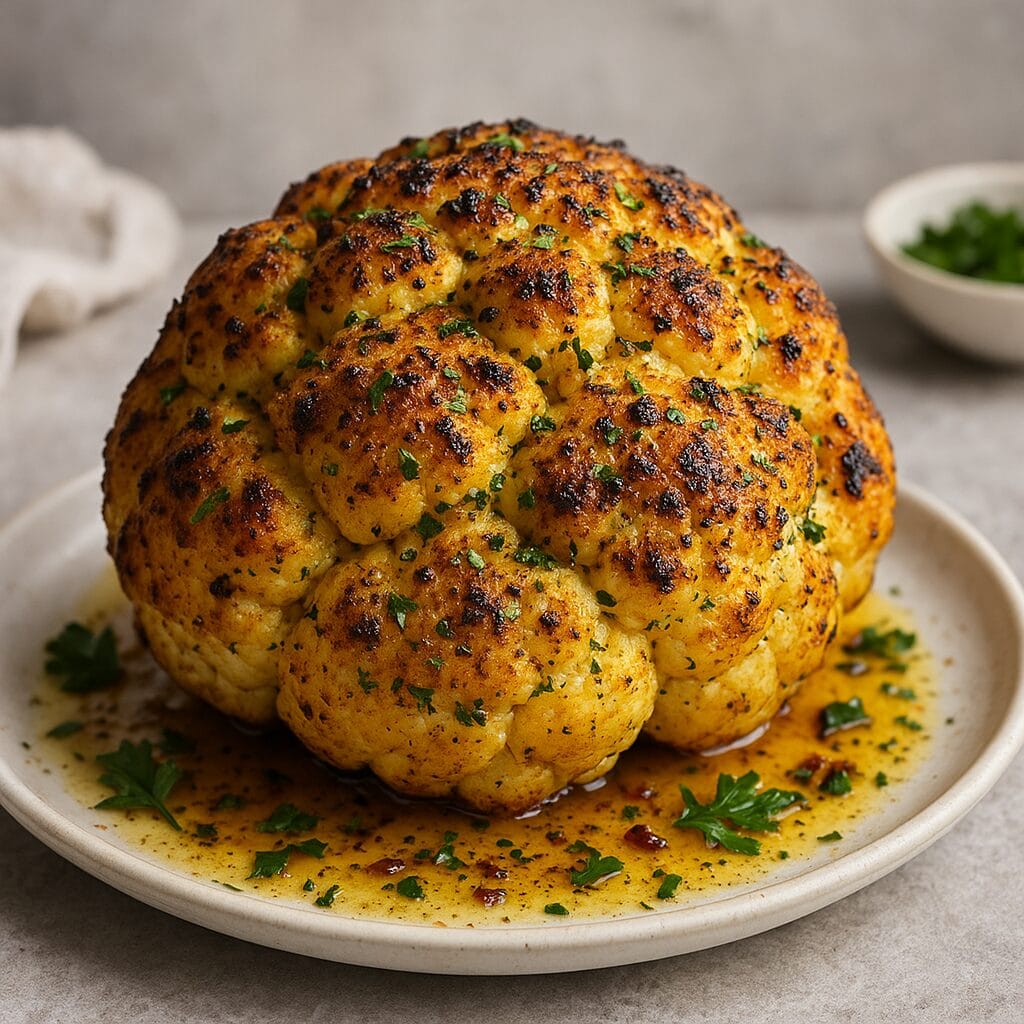

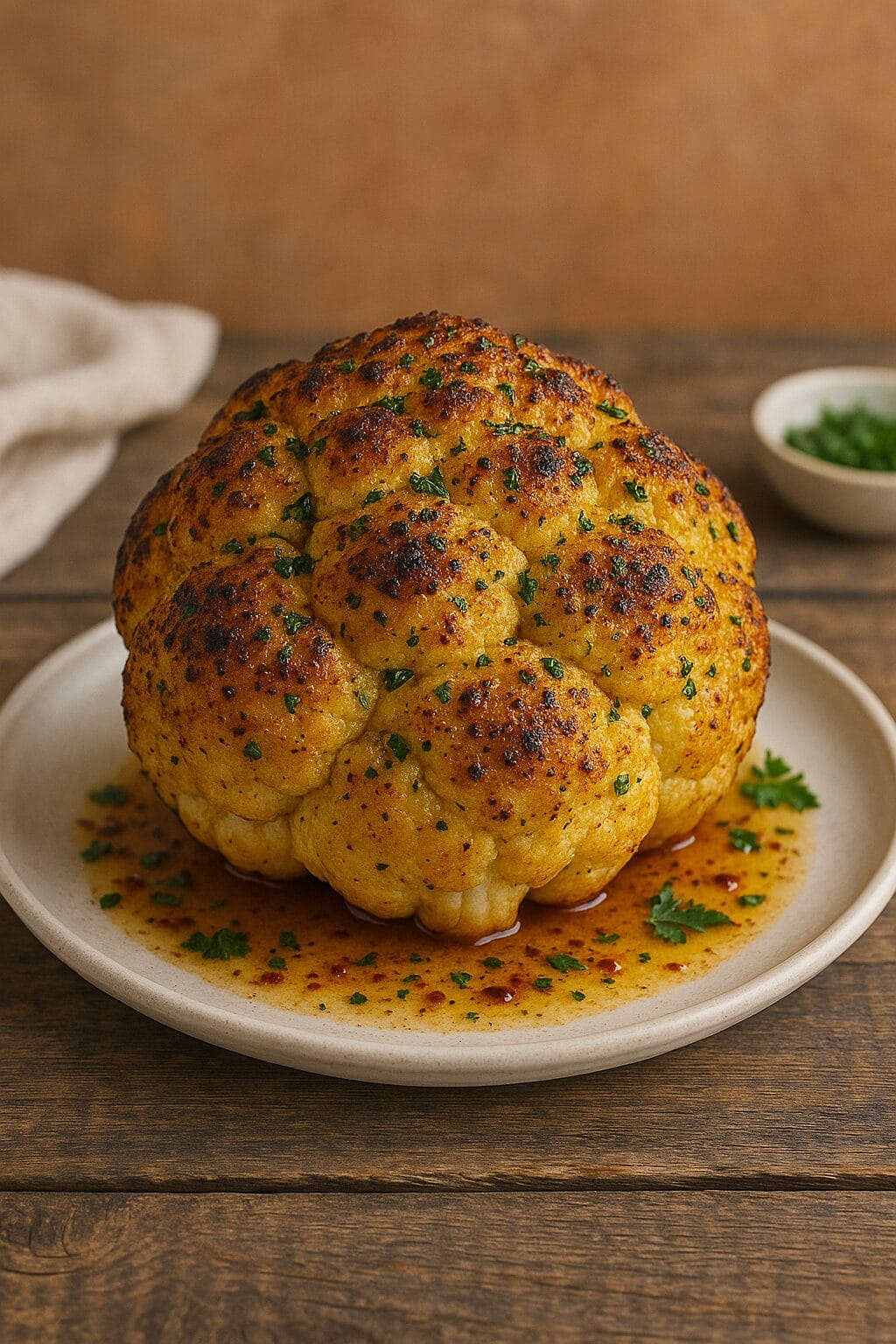
Transform an everyday vegetable into an extraordinary centerpiece with this Whole Roasted Cauliflower. Golden and caramelized on the outside, tender and flavorful within—each bite bursts with savory herbs, garlic, and a touch of spice. It’s an impressive dish that steals the spotlight, whether served as a hearty vegetarian main or a deliciously elegant side. Easy enough for weeknight dinners yet striking enough for special gatherings, this roasted cauliflower turns simplicity into culinary brilliance.
Whole Roasted Cauliflower


Method
- Preheat your oven to 400°F. Now, let's get that cauliflower ready! First, trim off the bottom of the stem. Next, peel away those outer leaves. Cut out the stem from the center, being careful not to break apart the florets. Rinse the cauliflower head and pat it dry.1 Head Cauliflower
- Place the whole cauliflower head in a large pot. Pour enough stock over the cauliflower to completely submerge it. Tuck the sprigs of fresh thyme and the bay leaf into the stock around the cauliflower. Place the pot over medium-high heat and bring the stock to a rolling boil. Once boiling, reduce the heat to low and simmer gently for 12 minutes.Fresh thyme1, 4 Cups Vegetable Stock, 2 Bay Leaf
- Once the cauliflower is tender, carefully remove it from the pot and drain any excess stock. Place the cauliflower in a cast-iron skillet or another oven-safe pan. Gently ladle a few spoonfuls of the cooking stock over the cauliflower, allowing it to settle in the crevices. Then, drizzle the top of the cauliflower with melted butter, ensuring it coats the surface evenly. Sprinkle with fresh thyme leaves and freshly ground black pepper.⅓ Cup Butter, Cracked Pepper
- Place the cauliflower in the preheated oven and roast for 10-15 minutes. The cooking time will depend on the size of your cauliflower. As it roasts, baste the cauliflower with the juices from the pan every few minutes to keep it moist. To test for doneness, insert a sharp knife into the thickest part of the cauliflower. If the knife slides in easily, it's ready. If you'd like to give the cauliflower a bit more color, you can broil it for an extra 2 minutes at the end. However, keep a close eye on it during broiling, as it can burn quickly.
- Ta-da! Your masterpiece is ready! Take that gorgeous roasted cauliflower out of the oven and give it a final flourish with a sprinkle of fresh thyme. Now, for the grand finale: slice it up and serve those beautiful wedges with a generous drizzle of those irresistible pan juices.Fresh thyme1
Nutrition
Notes
- Size and Shape: Look for a medium-sized cauliflower with tightly packed florets and a compact shape. This will ensure even cooking.
- Freshness: Choose a cauliflower that feels heavy for its size and has crisp, bright white florets. Avoid those with discoloration or soft spots.
- Trimming: Trim the stem so the cauliflower sits flat, but leave enough to hold the florets together. Remove the leaves, but you can save some of the smaller, tender ones for roasting alongside if you like.
- Washing: Rinse the cauliflower thoroughly, but make sure to pat it completely dry before roasting to promote browning.
- Oven Temperature: A high temperature (400-450°F) is ideal for roasting cauliflower, as it helps to create a crispy exterior and tender interior.
- Cooking Time: Roasting time will vary depending on the size of the cauliflower and your oven. Start checking for doneness around 20 minutes, and continue roasting until a knife inserted into the thickest part slides in easily.
- Basting: Basting the cauliflower with the pan juices helps to keep it moist and adds flavor.
- Broiling: If you want to add extra color and crispness, broil the cauliflower for the last few minutes of cooking. Watch it carefully to prevent burning.
- Seasoning: Simple seasonings like salt, pepper, and olive oil are all you need to bring out the natural flavors of the cauliflower.
- Aromatics: Adding herbs like thyme, rosemary, or garlic to the roasting pan can enhance the flavor.
- Spices: For global flavors, experiment with spices like cumin, turmeric, paprika, or chili powder.
- Resting: Allow the cauliflower to rest for a few minutes after roasting before slicing. This will help it retain its juices.
- Slicing: Slice the cauliflower into wedges for serving.
- Pan Juices: Don't forget to drizzle the flavorful pan juices over the cauliflower before serving.
- Garnishes: Fresh herbs, a squeeze of lemon juice, or a sprinkle of Parmesan cheese make great finishing touches.
Tried this recipe?
Let us know how it was!Ingredients
Ingredients:
- 1 head of cauliflower
- 4 cups chicken stock
- 2 bay leaves
- 4 sprigs fresh thyme, plus extra for garnish
- 1/3 cup melted butter
- Freshly cracked black pepper, to taste
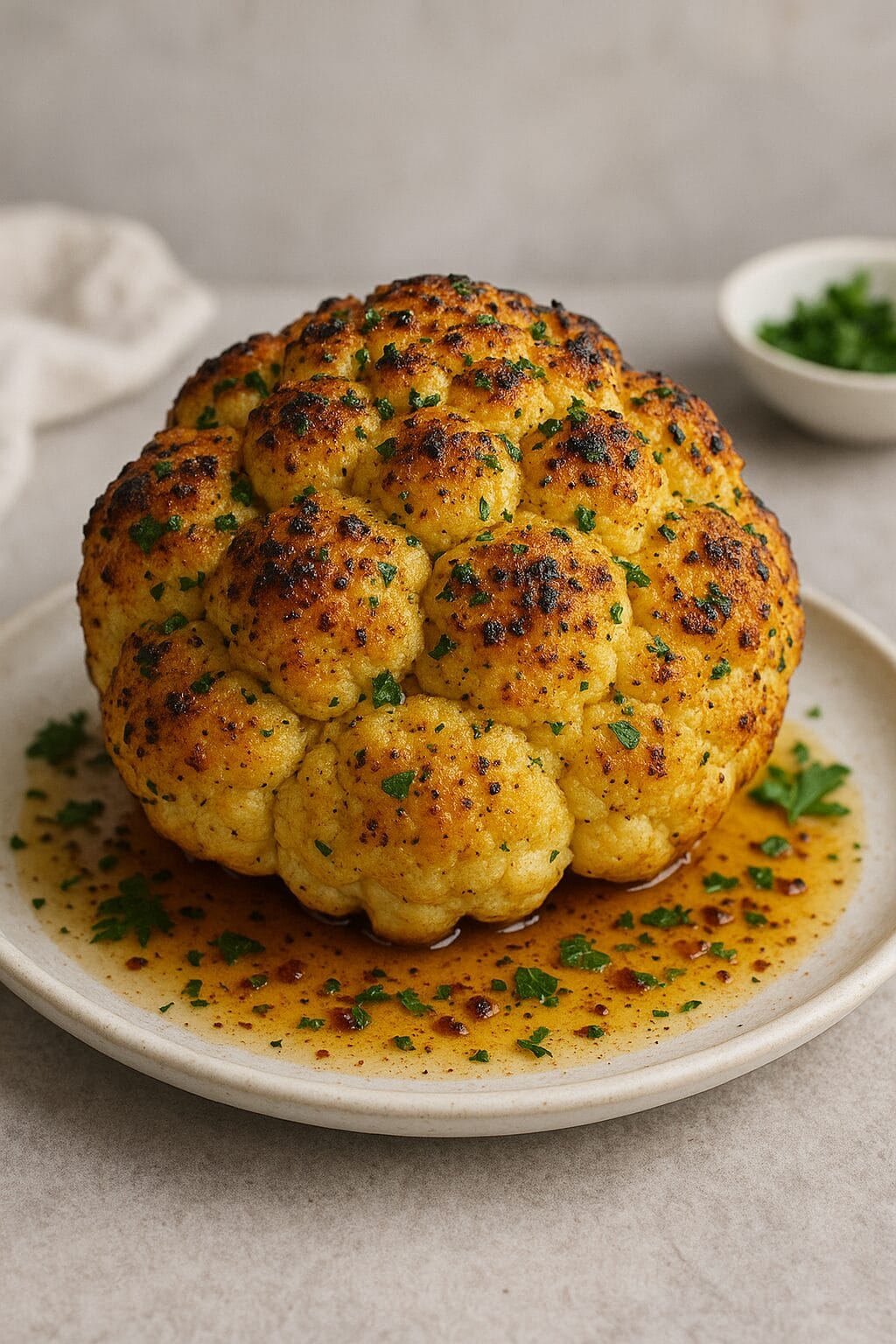
Image Gallery Whole Roasted Cauliflower
Storage & Leftovers
Storage:
Refrigerator: Let the cauliflower cool completely, then wrap it tightly in foil or transfer it to an airtight container. Store in the fridge for up to 4 days.
Freezer: For longer storage, cut the roasted cauliflower into smaller portions and freeze in a single layer on a baking sheet. Once frozen, transfer to a freezer-safe bag or container. Best used within 2 months.
Reheating:
Oven (Best method): Reheat at 375°F (190°C) for about 10–15 minutes to restore crispiness. Cover with foil if it starts to brown too much.
Microwave: Use short bursts (30–60 seconds) to avoid overcooking. Texture may be softer than freshly roasted.
Air Fryer: 350°F for about 5–7 minutes can quickly revive the exterior crisp.
Pro Tips:
Drizzle with a touch of olive oil or lemon juice before reheating to freshen the flavor.
Use leftovers in wraps, grain bowls, soups, or as a filling for tacos or flatbreads.
Table of Contents

 197
197 120
120 20
20 20
20